Stablecoins Have the Same Dollar. So Why Can’t They Just Interoperate?
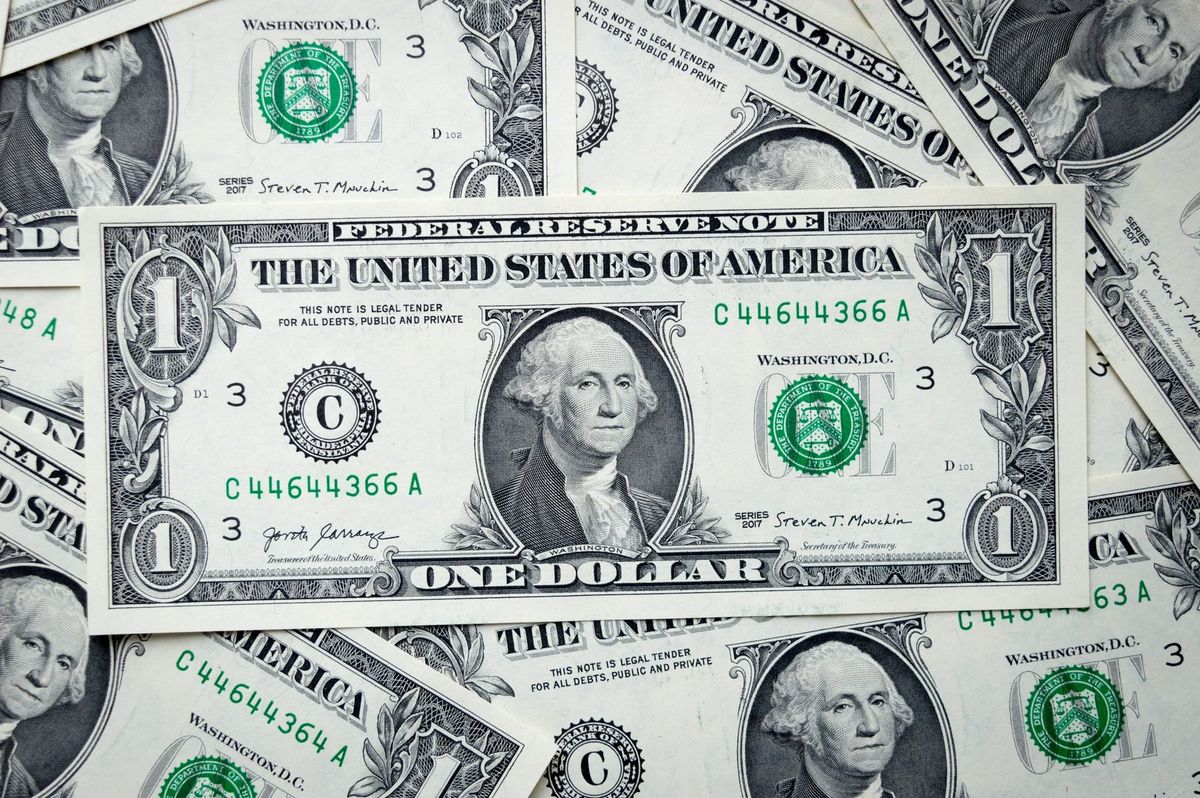
Stablecoins are supposed to be dollars.
USDC is designed to be worth one dollar. USDT is designed to be worth one dollar too.
So here is something I find strange.
If they are all based on the same dollar, why do we need so much infrastructure just to make them work together?
The usual answer is pretty straightforward: blockchains are different.
Ethereum is different from Solana. Solana is different from Base. They have different ledgers, different rules, and different ways of processing transactions.
That is obviously true.
But I don't think that is the most interesting part of the problem.
The more interesting question is this: the dollar is already the common reference. So why doesn't that make digital dollars naturally interoperable?
I think the answer is that stablecoins borrowed the dollar's value, but not the monetary system around it.
The Dollar Is More Than $1
One dollar is one dollar. That sounds almost too obvious to say.
But the dollar's role in the financial system is much bigger than simply giving things a price.
Banks use dollars. Companies borrow in dollars. International trade is heavily conducted in dollars. Financial assets are priced in dollars. Central banks hold dollar reserves.
Different institutions can use completely different technology and still operate around the same currency. They don't need to use the same bank, database, or software for the dollar to remain the common reference.
That coordination already exists.
Stablecoins get to start with this advantage. They don't have to invent a new unit of money. They can take an existing monetary unit and represent it on a blockchain.
At first, that sounds pretty simple.
It isn't.
Then the Dollar Gets Split Across Networks
Take USDC.
USDC exists on multiple blockchains, including Ethereum, Solana, and Base. Circle has built infrastructure such as CCTP to transfer native USDC between supported chains.
So the industry is already solving part of the problem.
But look at what happened in the first place.
From a user's perspective, it feels like we took one monetary unit—the dollar—and put it into multiple digital environments.
I can have 100 USDC on Ethereum. You can have 100 USDC on Solana. We both think we have $100.
But Ethereum doesn't simply read Solana's ledger. Solana doesn't simply read Ethereum's ledger.
The dollar is the same. The digital environment isn't.
And that is where things get interesting.
Same Dollar Does Not Mean Same Digital Money
We tend to say that USDC is USDC. But where that USDC exists matters.
A token on Ethereum exists on Ethereum's ledger. A token on Solana exists on Solana's ledger.
They may represent the same dollar value. They may even have the same issuer and the same name. But that doesn't mean Ethereum and Solana automatically treat those tokens as one asset.
The Bank for International Settlements has also discussed this kind of fragmentation in its work on stablecoins, pointing out that assets on different blockchains can remain siloed because the underlying ledgers don't naturally communicate with each other.
So we end up with something a little strange.
One monetary unit, but many digital environments.
The dollar gives us the common unit. It doesn't give us the connection.
And I think that distinction is important.
And This Is Why Interoperability Matters
I don't think interoperability is simply a technical problem.
Of course, there is a technical problem. Someone has to make Ethereum and Solana communicate. Someone has to verify transfers. Someone has to handle the movement of assets.
Protocols like Circle's CCTP are already doing this for USDC across supported networks.
But CCTP solving one interoperability problem raises a bigger question for me.
What happens if there are many stablecoins, many issuers, and many blockchains?
Why should every digital dollar need its own way to connect to every other digital dollar?
Imagine that stablecoins keep multiplying.
USDC.
USDT.
Bank-issued dollar tokens.
Tokenized deposits.
New stablecoins for specific markets.
And then dozens of blockchains underneath them.
To me, simply adding more bridges starts to look like an incomplete answer.
The problem isn't only how to move one token from A to B. It is how to coordinate different digital systems that are representing the same underlying monetary unit.
That is a much bigger problem.
The Dollar Already Has a Monetary System
This is the part I think gets missed.
The dollar already has something that crypto doesn't automatically get just by putting "$1" on a token.
There is a common unit of account. There is a huge network of institutions that recognize it. There are established ways to settle dollar obligations. Banks, companies, governments, and financial markets have spent decades building systems around the same monetary unit.
That coordination already exists.
Stablecoins can use the dollar as their reference, but they cannot simply inherit all of that coordination by putting the dollar on a blockchain.
They still have to figure out how their different digital representations interact.
So interoperability isn't just about moving tokens.
It is about making different digital systems treat the same underlying monetary unit as something that can actually move between them.
What If There Is No Single Digital Dollar?
This gets even more interesting if we stop assuming that one stablecoin will eventually take over everything.
Maybe USDC stays important. Maybe USDT stays important. Maybe banks issue their own dollar tokens. Maybe tokenized deposits become a major part of the market. Maybe several blockchains remain important.
I don't think we should assume that the market will eventually collapse into one stablecoin and one chain.
It may not.
And if it doesn't, interoperability becomes more important, not less.
Because then the question isn't:
Which stablecoin becomes the digital dollar?
It becomes:
How do all these different digital dollars live in the same monetary system?
That is a much harder problem.
The Infrastructure May Become the Real Competition
This is where things get interesting for me.
If many stablecoins and many blockchains survive, the important competition may not happen only between stablecoins. It may also happen between the systems that connect them.
Who can connect which networks?
Which assets can move?
How is the transfer verified?
Where does liquidity come from?
Who decides which networks are supported?
Those decisions can matter.
An interoperability layer may look like plumbing. But plumbing becomes pretty important when everyone needs it.
The same thing could happen here.
The infrastructure connecting digital dollars could become a significant part of the financial system itself.
The User Should Not Have to Know the Chain
There is a simple test for whether all of this actually works.
Imagine sending someone $100.
You shouldn't have to ask:
"Are you on Ethereum?"
"Are you on Solana?"
"Which version of USDC do you have?"
"Which bridge should I use?"
If I am sending someone $100, I want to think about the $100, not the blockchain underneath it.
That is how we expect a mature payment system to feel.
The complicated part should be underneath.
Stablecoins have the opportunity to make dollars programmable and move them across digital networks. But if using them requires users to understand the networks underneath, we haven't really removed the complexity.
We've just moved it somewhere else.
The Question I Keep Coming Back To
Stablecoins have something extremely valuable from the beginning.
They have the dollar.
They don't need to invent the world's preferred monetary unit. But that creates an unexpected problem.
They are taking one monetary unit and putting it into a world where there is no single digital ledger, no single blockchain, and no requirement that every issuer use the same infrastructure.
So now we have one currency, many issuers, many chains, and many ledgers—and somehow all of them are supposed to behave like dollars.
That is why I think interoperability will become a much bigger issue as stablecoins grow.
Not because the technology to connect blockchains doesn't exist. It does.
The harder problem is that the dollar gives us a common monetary reference, while the digital world does not automatically give us a common way for all those dollar representations to interact.
Maybe one standard will eventually dominate. Maybe several will compete. Maybe the market will build something completely different.
I don't know.
But I think this is the more interesting stablecoin question:
If everyone is building digital dollars, who is building the system that makes them feel like one dollar?